The societal value of green connections
Translated from original text in Dutch by Els Leclercq
Rotterdam aims to grow and densify, provide space for living, working, and recreation, adapt to a changing climate, and simultaneously ensure health, quality of life, and social cohesion. In this context, nature is not a luxury or a residual category, but a fundamental condition. Not as a separate place or project, but as an essential spatial and social framework that enables urbanization, mitigates the negative effects of infrastructure, and connects separate projects into a cohesive urban district.
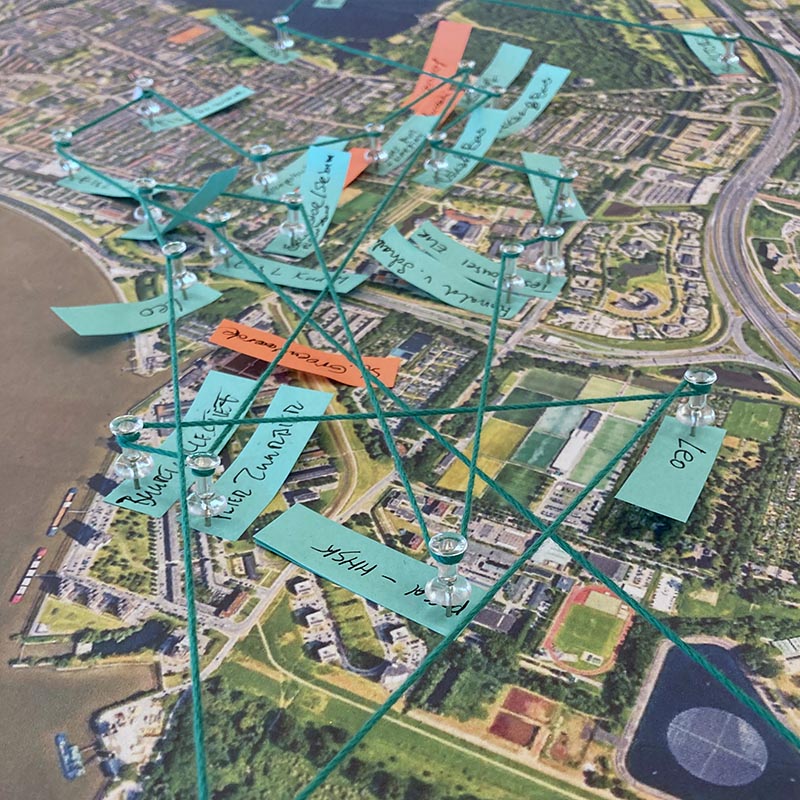
A large group of residents and organizations* active in Rotterdam East endorses the ambitions of the City of Rotterdam but believes that the current approach to giving area-by-area substance to the East Flank Vision does not pay sufficient attention to precisely this integrality. To demonstrate the added value of a spatial and social framework, this ‘coalition of the willing’ has commissioned architecture studio el KANTOOR and research agency Foundation for Sustainable Development to visualize and monetize this ambition.
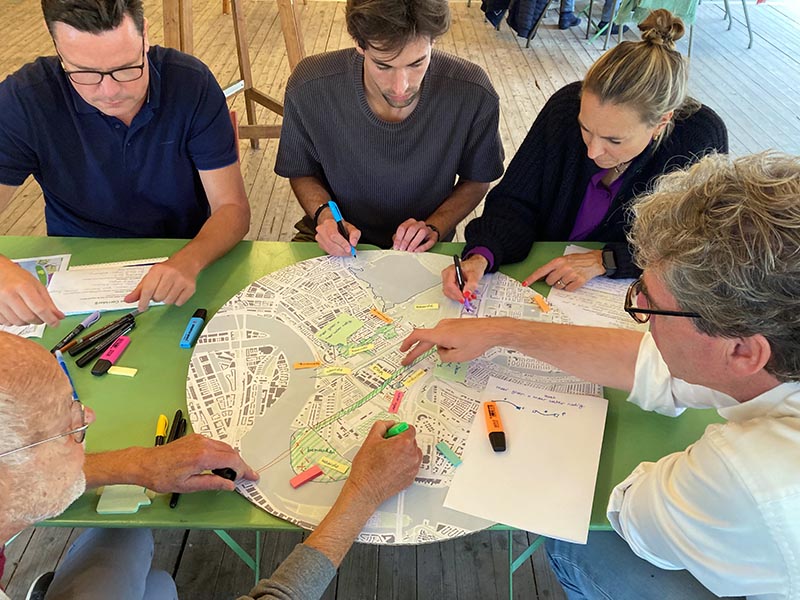
To this end, a possible scenario for a green and social network was designed during a co-creative workshop. In this Green CorridorS scenario, existing nature and water structures are explicitly linked. The goal is not to introduce a new plan, but to demonstrate what happens when existing qualities gain coherence and are approached as a single system.
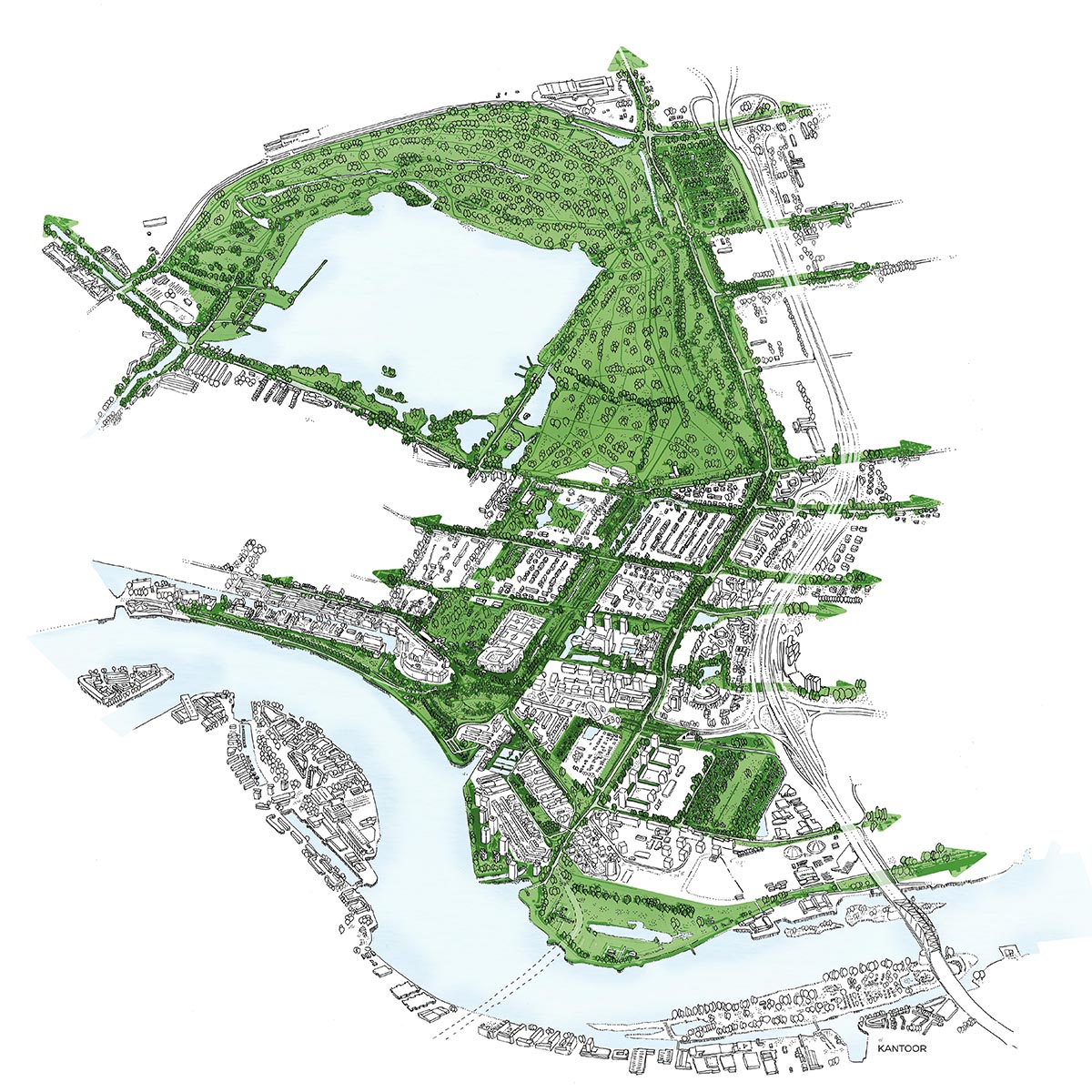
Subsequently, the societal value was mapped for three scenarios; the existing situation, the East Flank Vision, and Green CorridorS. In this report , this value is approached via ecosystem services: the ways in which nature and water contribute to the well-being and functioning of society. Examples include health, recreation, water storage, air purification, and climate regulation.
The results are clear; in the Green CorridorS scenario, the annual societal value amounts to approximately 15 million euros, more than ten percent higher than in the current situation. In the East Flank Vision, that value decreases slightly. The largest contributions do not come from production, but from health, recreation, and water storage. These are precisely the benefits associated with the accessibility, proximity, and coherence of nature and water. The analysis shows that it is not so much about the quantity of greenery, but about the way in which greenery and water are connected to each other and to the city.
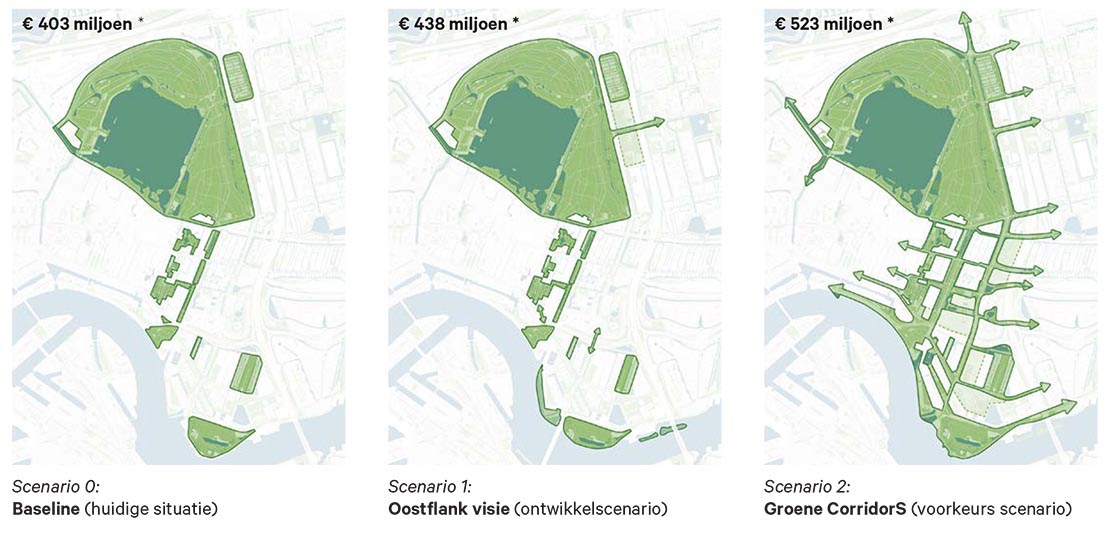
When these annual benefits are considered over a period of thirty years, an even clearer picture emerges. The Green CorridorS scenario represents a net present value of over 520 million euros, compared to approximately 400 million euros in the current situation. This value accumulation stems from ecosystem services that recur annually and simultaneously reduce societal risks, such as flooding, heat stress, and healthcare costs. In this context, the green spatial network functions as both an ecological and a social carrier.
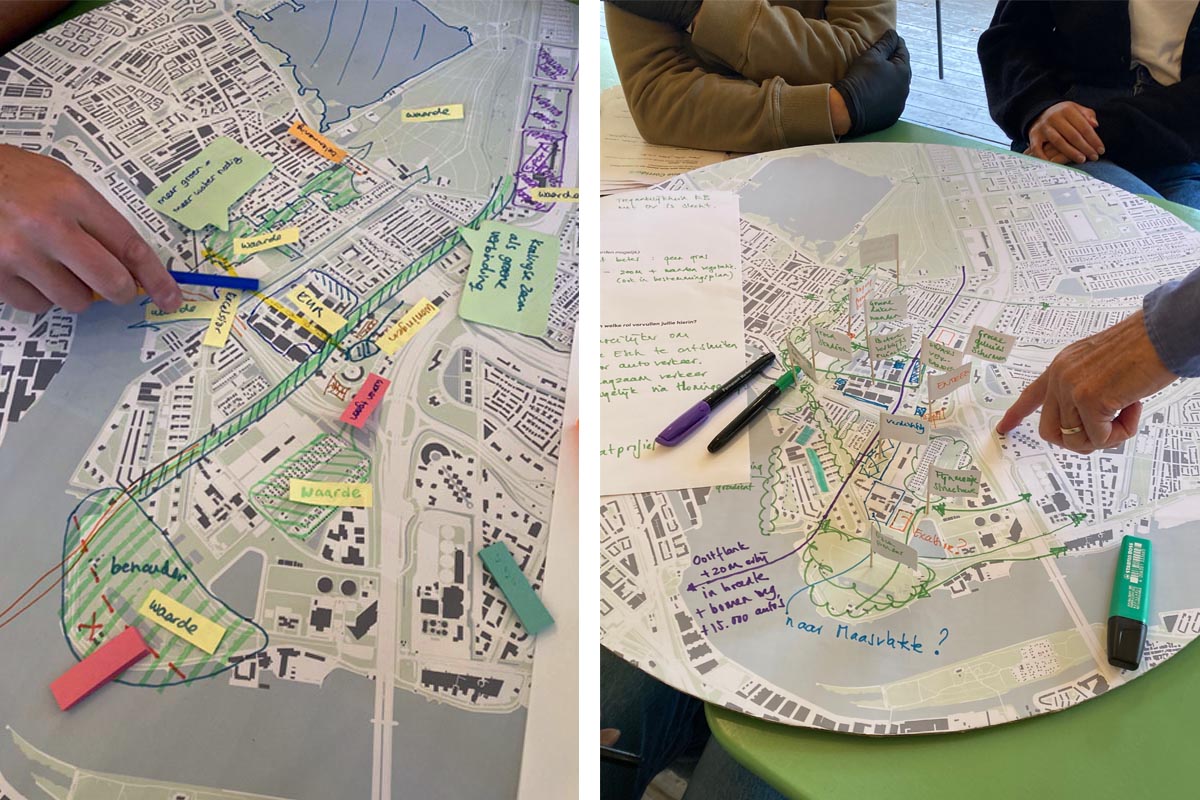
The core message of this process and its outcomes is simple yet essential. Those who focus on connection harvest added value. Not only ecologically, but also socially and economically. In a city that wants to grow without losing its livability, but rather to enhance it, green corridors are not an additional ambition, but an absolutely necessary foundation. The societal value is already there. The question is whether we dare to harness it by leaving the traditional way of city-making behind and embarking on new, innovative paths, in which greenery and water take the lead and in radical collaboration to maximize collective creativity.
This does require political courage.
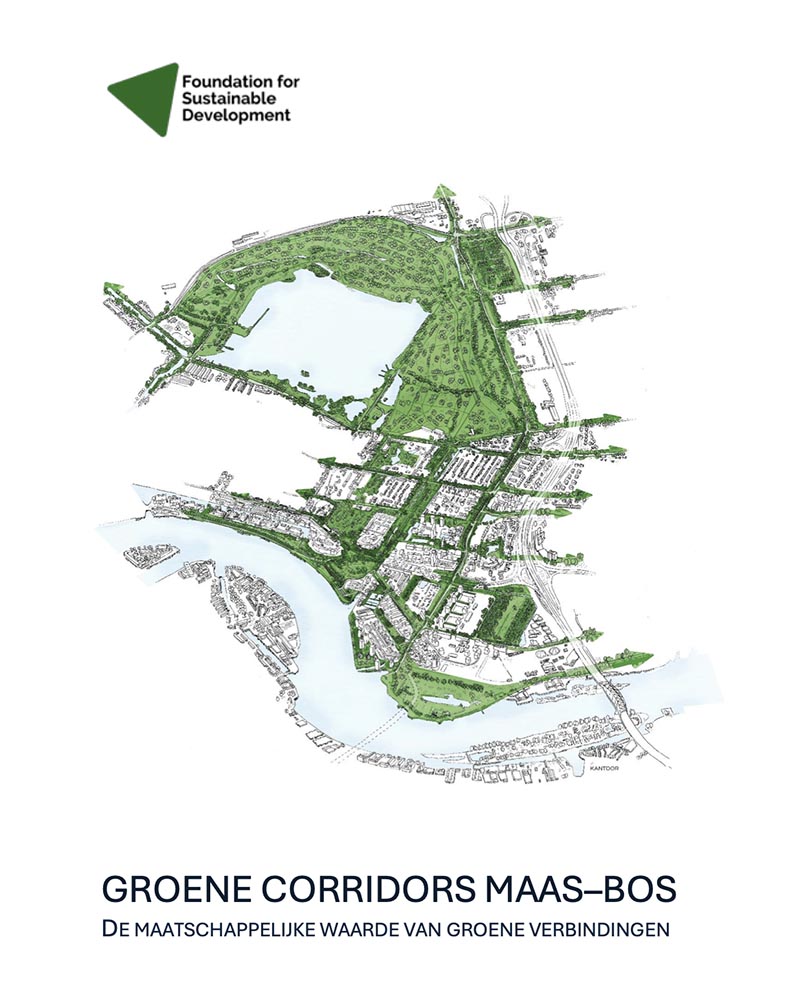
Research report by FSD in Dutch:
Year:
2025-ongoing
Location:
Rotterdam, the Netherlands
Funding:
Wijkraad Kralingen and private funding
Program:
Urban development scenario
Size:
800 hectares
Status:
Under development
Design team:
Isabel Driessen and Andrés López
Project guidance and initiative:
Els Leclercq
Research:
Foundation for Sustainable Development; Mieke Siebers, Vince van ’t Hoff
*Collaborators:
Stichting Oude Plantage, Trompenburg Arboretum en Tuinen, Bewonersvereniging Kralingen Oost (BKO), Kralingen aan de Maas (KadM), Stichting Zeldenooit, sportvereniging BVO Excelsior, Stebru, Bakkers-Hommen, Volkstuinvereniging Kweeklust, hockey- en tennisvereniging Victoria, Erasmus Universiteit Rotterdam and Buurtcollectief De Esch.